
The innovative Hyperloop is made possible in part by a heat exchanger
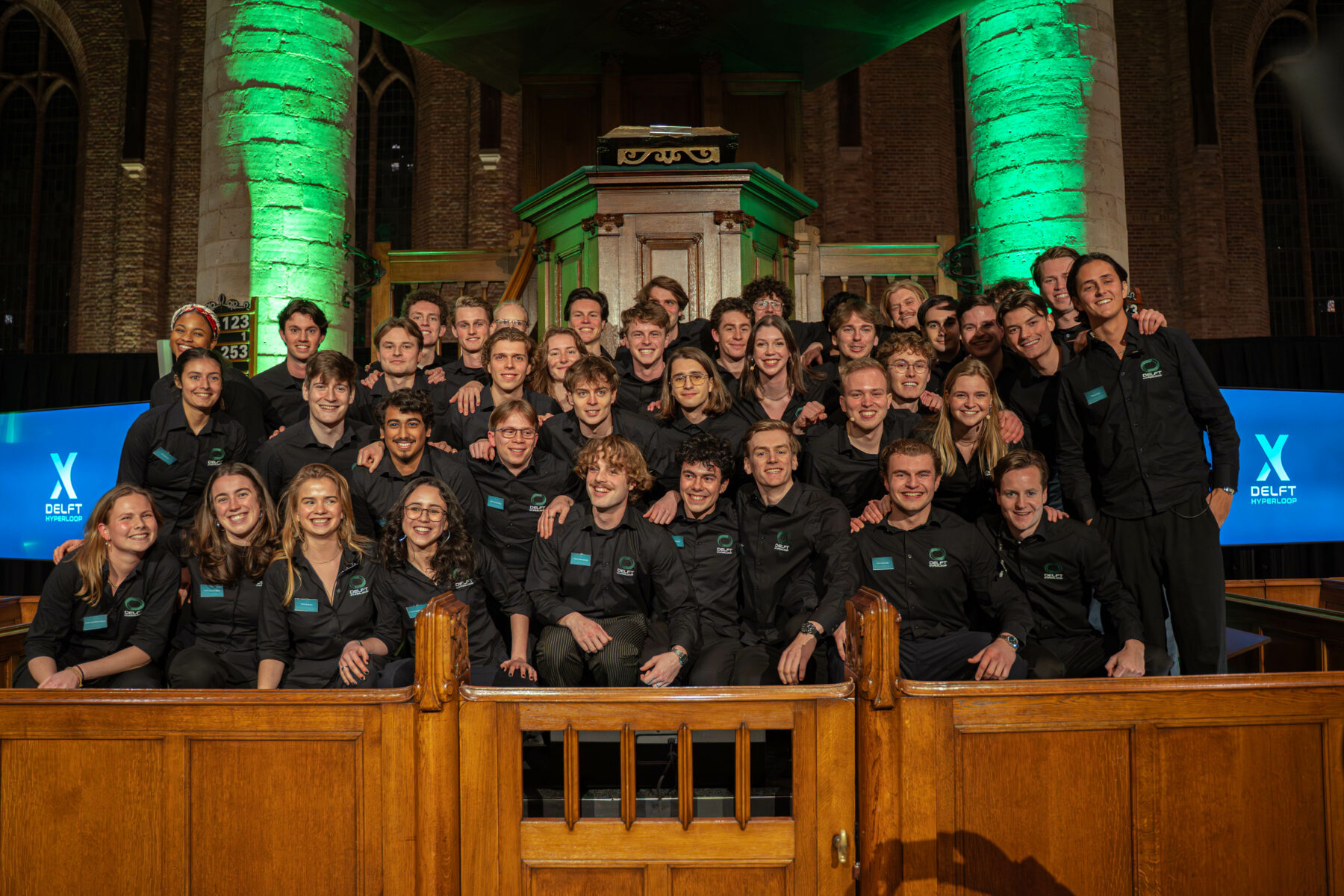
A hyperloop pod capable of traveling sustainably from Amsterdam to Paris in just 30 minutes is the core focus of the Delft Hyperloop team at TU Delft. When this nonprofit organization approached Kapp for support, we were immediately enthusiastic. Kapp is proud to contribute to projects that accelerate technological progress and strengthen innovation within Europe.
Delft Hyperloop sought our expertise in selecting a suitable heat exchanger for their design. The fundamental challenge: how do you dissipate heat in a system where traditional cooling is effectively impossible? Since the pod operates in a near-vacuum, there is no surrounding air to carry heat away. Facing a mountain of complex models, the team struggled to maintain a clear overview of the best path forward. Furthermore, the problem was difficult to model because it involved a Phase Change Material (PCM) that cyclically melts and solidifies within the heat exchanger. We helped by stripping away the complexity and reducing the problem to its essence with clear, well-reasoned arguments.
What is the Hyperloop?
Delft Hyperloop is developing an innovative, energy-efficient alternative for short flights. It is a transport technology in which capsules travel at high speed through a tube with low air pressure. They are propelled by magnets. This minimizes both air and rolling resistance, meaning very little energy is needed for the Hyperloop to maintain its speed. This is precisely where the strength of this technology lies. The Delft Hyperloop team is working on this innovative technology and builds a new prototype every year. This year, the tenth team is working on the pod ‘Theia II’.
Efficient heat transfer
A major challenge in hyperloop technology is cooling the system. Neither convection nor conduction is possible because the capsule has no contact with the tube or with air. However, the electric coils and electronics generate large amounts of heat, causing them to overheat without cooling. That is why Delft Hyperloop opted for a PCM-based heat battery, in which this heat is temporarily stored. This enables longer and more efficient trips.
The Delft Hyperloop team ran into a specific technical bottleneck: how to efficiently transfer heat from the water-cooling loop to the PCM. This required a highly optimized heat exchanger, even though there were still several uncertainties in the design. A major complication was that melting PCM effectively has lower thermal conductivity than solid PCM, as the temperature gradient within the material is very small. This makes heat transfer during operation less efficient and more difficult to model.
“Here to teach, here to learn”
Kapp’s contribution: Here to teach, here to learn
Kapp helped make this complexity manageable by reducing the problem to a one-dimensional model. This allowed crucial design choices to be made, such as the optimal fin-to-fin spacing and fin thickness. In addition, we helped determine the correct pipe-to-pipe spacing.
Using these parameters, combined with the supplier’s manufacturing capabilities, a fully integrated design has been realized. The entire heat exchanger functions not only as a thermal component but also as a watertight housing for the PCM. Thanks to this solution, Delft Hyperloop can store and manage heat more efficiently, which directly contributes to the performance and reliability of the hyperloop pod during longer trips.
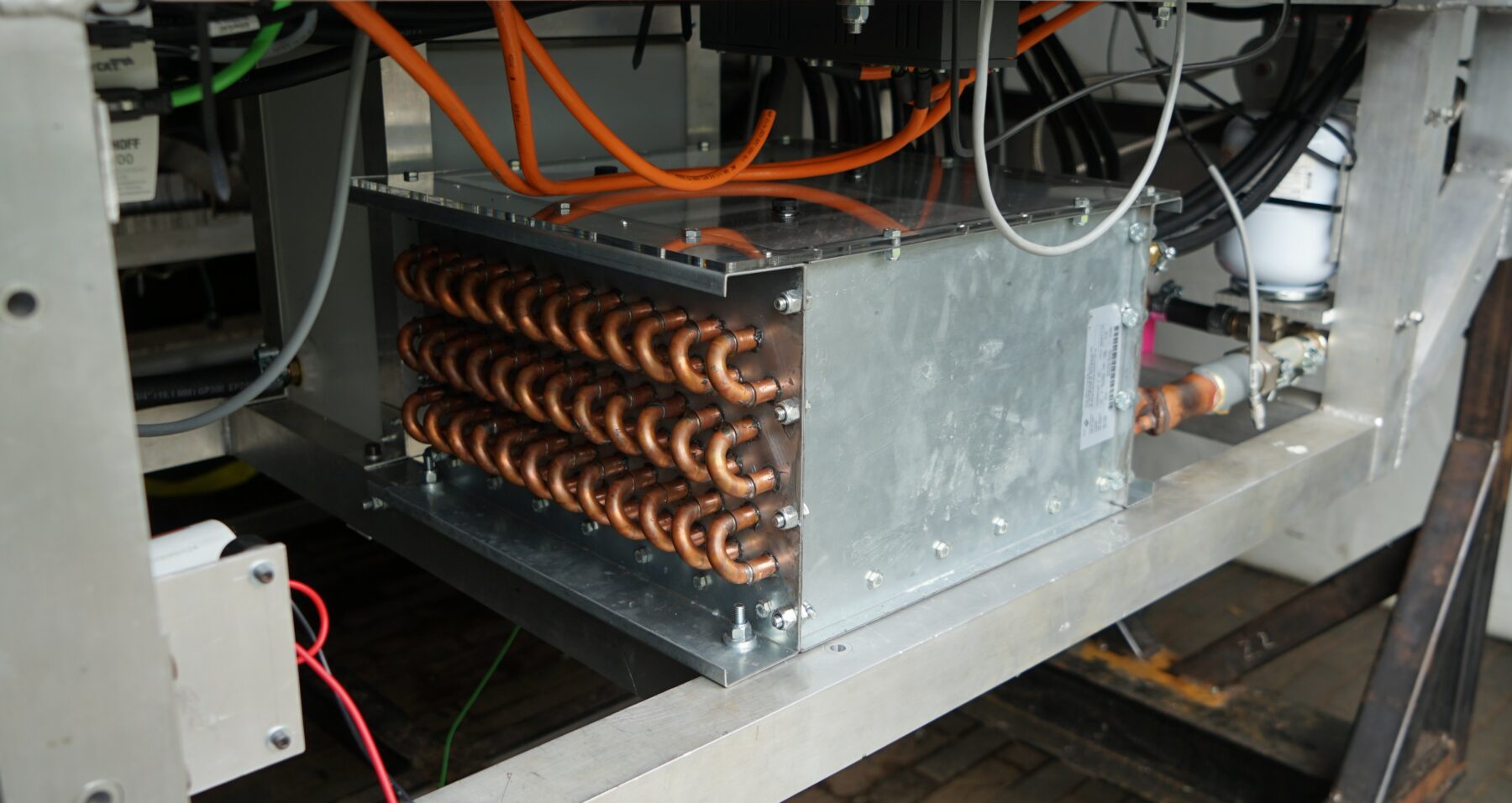
Because we are keen to encourage initiatives like this, we offered this support entirely free of charge. In addition, we financed the heat exchanger using our own resources. It was our pleasure to be able to share our expertise and thus contribute to a piece of the future.